What Tools Do Agencies Need to Track AI Search Visibility
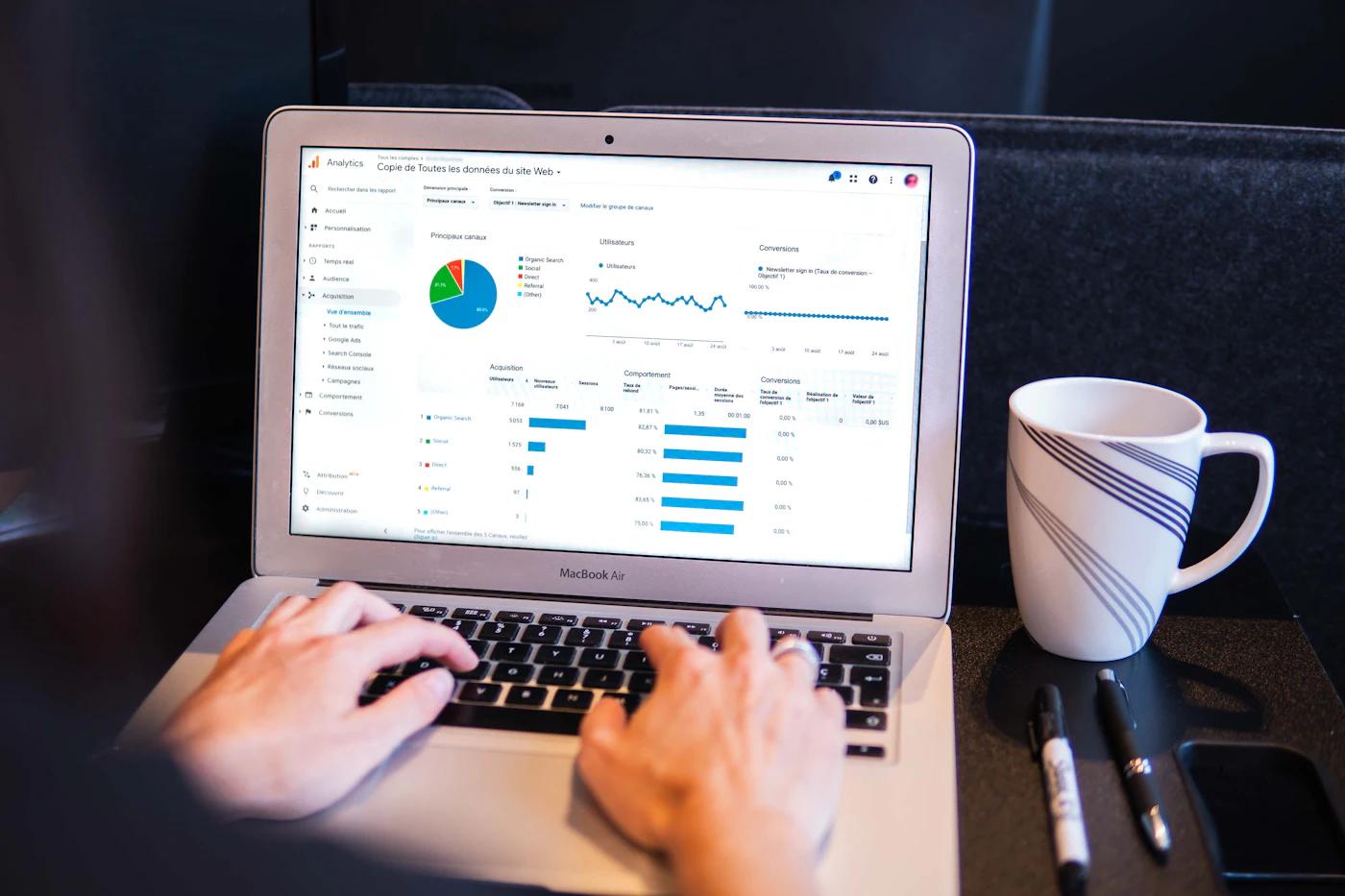
Agencies need four layers to track AI search visibility: a prompt-tracking tool that samples ChatGPT, Perplexity, Gemini and Google AI answers repeatedly, Search Console and GA4 for what reaches the site, a rank and SERP tool such as Ahrefs or Semrush for classic SEO context, and a spreadsheet to store prompt sets and change logs. Paid trackers range from about $20 to $3,000 or more a month depending on the source and plan.
| Layer | Purpose | Examples | Published price (varies by source and plan) |
|---|---|---|---|
| Prompt tracker | Mentions, citations, share of voice | Ahrefs Brand Radar, Semrush AI tools, Peec AI, Profound, Scrunch, Otterly AI | From $20 to $745 a month in one April 2026 roundup; $50 to $399 in a September 2026 one |
| First-party analytics | Sessions and clicks | Google Search Console, GA4 | Free |
| SEO suite | Rankings, SERP features, backlinks | Ahrefs, Semrush, SE Ranking | Varies by plan |
| Working files | Prompt sets, baselines, change logs | Spreadsheet, shared drive | Low |
What does an agency actually need to measure?
Four things: how often a client's brand appears in AI answers (mentions), how often its pages are cited as sources (citations), how it compares with competitors (share of voice), and what those appearances do to site traffic. Tools exist for the first three. The fourth comes from your own analytics.
Ahrefs defines these terms in its Brand Radar help center. A mention is counted once when a brand appears at least once in an AI-generated response. A citation is counted once per domain when at least one of its pages is cited. "Found in" counts every page the AI retrieved while building an answer, whether or not it was cited. Impressions sum the search volumes of prompts where a brand appears, and AI share of voice is a brand's percentage of impressions against other tracked brands, calculated as a weighted average when several platforms are combined.
Write your own definitions into your reporting template. Tools differ in how they count, and a client comparing two reports built on different definitions will conclude that one of them is wrong.
Why can't you just check ChatGPT by hand?
You can, and you should start that way, but it does not scale or hold up statistically. AI answers vary between runs. The same prompt can produce different brands on different days, on different engines, with or without login state. One run tells you very little.
Ahrefs makes the same point about sample size, comparing tracking a small number of prompts to predicting the weather by looking out of your window, and suggests aggregating thousands of data points to see trends. For an agency, the practical version is repeated sampling: run each prompt several times, across engines, on a schedule, and report a rate instead of a yes or no.
Manual checking still has a role. It teaches you how answers differ by engine, it lets you read the actual text (tools show summaries), and it is free. Use it for a prospect audit and for spot checks on tool output.
What do the main AI visibility trackers cost?
Prices differ a lot between sources, and that is worth knowing before you quote a client. A September 8, 2026 comparison by Detailed listed starting prices of $50 a month for Ahrefs Brand Radar, $95 for Peec AI, $399 for Profound, $95 for Promptwatch, $250 for Scrunch (five user licenses included), $125 for Searchable, $99 for Semrush's brand performance analysis and $219 for Surfer SEO. That comparison concluded that Ahrefs Brand Radar was the cheapest option in four of six monitoring scenarios it modeled, helped by pay-per-overage pricing and support for unlimited separate projects.
An April 21, 2026 roundup from Rankability listed a far wider spread: Rankscale AI at $20, Otterly AI at $29, Nightwatch LLM Tracking at $32, LLMrefs at $79, Peec AI at $99, SE Ranking's tracker at $119, Surfer at $194, Profound at $499, Ahrefs Brand Radar at $699, Semrush's AI toolkit at $745 and seoClarity ArcAI at $3,000. That guide calculated an average of $337 and a median of $99 a month, and noted that higher-priced tools tend to add analytics, team collaboration, white-label reporting, API access and priority support, recommending premium tools mainly for agencies managing 50 or more clients. Rankability sells a tracker itself and lists its own product in the table.
Why does Brand Radar appear at $50 in one place and $699 in another? Most likely because of different plan tiers, add-ons and dates. The lesson is to check current pricing on the vendor's page before you build a client quote around any figure, including these.
Which features matter for an agency compared with an in-house team?
Multi-client management comes first. If each client needs a separate workspace, prompt list and competitor set, per-project pricing and project limits change your cost. Detailed noted that Ahrefs supports unlimited separate projects, which matters for an agency.
Report output comes second. Agencies need exports, scheduled emails or white-label dashboards. Rankability's guide places white-label reporting among the features that typically arrive at higher price tiers, so confirm it before you buy.
Engine coverage comes third. Check which assistants the tool samples: ChatGPT, Perplexity, Google AI Overviews and AI Mode, Gemini, Copilot, Claude. A tool that covers only two engines gives a narrow picture. Ahrefs Brand Radar, per Detailed, covers custom prompts across ChatGPT, Perplexity and Google AI Mode.
Data access comes fourth: prompt-level answer text, cited URLs, run history and API access. You want to be able to show a client the actual answer where they were missing.
Finally, ask how the tool collects data. Some query the engines' consumer interfaces, some use APIs, and some model visibility from panel or search-volume data. Each method has different accuracy, and vendors are rarely neutral about which is best. Test with prompts whose answers you can check by hand.
What free or low-cost tools cover the basics?
Google Search Console reports AI Overview and AI Mode traffic. Google's documentation says traffic from those features is counted in the Performance report under the Web search type as part of total search traffic. GA4 shows referral sessions from sources such as chatgpt.com and perplexity.ai when the referrer is passed. You can build a segment or custom channel group to isolate them. AuthorityTech reported in August 2026 that AI referrals are roughly 1% of total visits, so expect small numbers.
Ahrefs offers a free AI visibility checker for a quick brand look, useful on a sales call. A spreadsheet holds your prompt set, baseline answers and change log. Add screenshots for dated evidence.
Bing Webmaster Tools matters for Copilot and, indirectly, for engines that use Bing's index. Ahrefs' July 2025 study of 15,000 queries found Copilot's cited URLs matched Bing's top 10 in 16.6% of cases, the highest of the assistants tested for Bing overlap, which is a reason to verify a client's Bing indexing.
How do SEO suites fit in?
Ahrefs and Semrush already hold your keyword, rank and backlink data, and both now include AI visibility features, so many agencies extend the suite they use instead of adding a separate vendor. The advantage is one login and one invoice, and the ability to compare AI visibility with organic performance in the same place.
The drawback is depth. Standalone trackers such as Profound and Peec AI were built around prompts and often provide more detailed answer analysis, though reviews from competitors (Profound's own blog, for instance, argues that Ahrefs Brand Radar is good for SEO teams but not enough for answer engine optimization) should be read as marketing. Run a pilot on one client with two tools and compare outputs before you commit.
Classic SEO tools still do the work that supports GEO: finding question-style queries, checking whether pages rank in the top 10 (Ahrefs found 76% of Google AI Overview citations come from top 10 pages), auditing technical health and identifying backlink and mention opportunities.
How should an agency set up tracking for a new client?
Follow a consistent sequence so results are comparable across clients.
Build the prompt set: 25 to 40 buyer questions grouped as category, comparison and problem questions, pulled from Search Console queries, sales calls and People Also Ask boxes. Pew Research found that searches of 10 or more words produced Google AI summaries 53% of the time, versus 8% for one to two word searches, so include longer natural phrasing.
Define the competitor set: three to six brands the client actually loses deals to.
Run a baseline: each prompt at least three times per engine, recording answer text, mention, citation, position and date.
Set the schedule: weekly or every other week for prompt sampling, monthly for client reporting.
Connect first-party data: a Search Console property, a GA4 segment for AI referrals, and a note of brand search volume trends, which often move when AI answers name a brand.
Store everything: raw exports in a shared drive, not only inside the vendor's dashboard, so that you keep history if you switch tools.
How much tool spend fits into a GEO price?
Treat tooling as a per-client cost allocation. Demand Local's pricing guide suggests capping tooling at about 15% of GEO revenue, which is one agency guide's opinion and not a benchmark. If you charge $2,500 a month for a GEO package, that ceiling is $375 a month of tool cost per client. A $99 tracker shared across ten clients falls well below it, while a $745 toolkit used for a single small client does not.
Pool costs across clients where the vendor allows unlimited projects, and check overage rules. See our guide on how much an agency should charge for GEO for a cost-plus method that folds tooling into the price.
What can these tools not tell you?
They cannot prove causation. A rising mention rate after a content change is suggestive, not proof, because engines update and competitors change. They cannot see every prompt a real user types. Tracked prompts are a sample you chose. And they cannot always distinguish a helpful mention from an unhelpful or inaccurate one, so read the text of important answers.
They also do not replace SEO measurement. Ahrefs' December 2025 update found a 58% lower position one click-through rate when AI Overviews were present across 300,000 keywords, which you would only see by watching clicks and impressions in Search Console. Keep both dashboards.
Agencies that would rather not build this stack can obtain tracking and reporting through a white-label partner. EliteLeadGrow provides white-label SEO and GEO fulfillment, including measurement, and it is worth comparing that cost against buying tools and training staff yourself.
What is the cheapest way to start tracking AI visibility? Use manual prompt checks, Search Console, GA4 and a spreadsheet, which cost nothing beyond time. Then add a low-cost tracker; published roundups list entries from $20 to $99 a month, though features and prompt limits are limited at that level.
Does Google Search Console show AI Overview clicks? Google's documentation says it counts them within total Web search performance data. To isolate them, compare query and page patterns and pair Search Console with a tracker.
Do I need separate tools for ChatGPT and Google's AI features? Not necessarily. Several trackers cover both, but coverage varies, so check which engines each plan samples. Ahrefs' study found low overlap between what ChatGPT cites and Google's top 10, so treat the engines as separate surfaces.
Which tool is best for agencies? It depends on client count, reporting needs and engine coverage. Pilot two tools on one client and compare accuracy against manual checks before committing.
The bottom line
Tracking AI search visibility takes a modest stack: a prompt tracker that samples repeatedly, first-party analytics for the traffic effect, your SEO suite for context and disciplined files for baselines. Published prices vary widely, so verify them at purchase, and choose a tool by multi-client support, reporting and engine coverage before price. Whatever you choose, report ranges and trends, and keep a manual check in the routine so you know when the dashboard is wrong.
Keep reading
- How to Run a Free GEO Audit on a Prospect Call: light tooling.
- How to Build a GEO Case Study With No Clients Yet: measurement design.
- What KPIs Should an Agency Track for a GEO Client
- How Do You Benchmark a Client Against Competitors in AI Search
- How to Report GEO Results to a Client Who Only Understands Google Rankings
Sources
- Detailed: AI visibility tools pricing comparison - September 8, 2026 starting prices and scenario findings
- Rankability: How much should you pay for AI search visibility tracking tools - April 2026 price list, average and median, agency features
- Ahrefs Help Center: AI visibility metrics - definitions of mentions, citations, impressions, share of voice
- Ahrefs: 7 steps for tracking your ChatGPT visibility - sample size caveat and Brand Radar capabilities
- Google Search Central: AI features and your website - AI feature traffic counted in Search Console Web performance
- Ahrefs: Only 12% of AI cited URLs rank in Google's top 10 - Bing overlap for Copilot, 76% AI Overview figure
- Ahrefs: AI Overviews reduce clicks (update) - 58% lower position 1 CTR
- Pew Research Center: AI summary and click behavior - summary frequency by query length
- AuthorityTech: AI referral traffic is 1 percent of total visits - roughly 1% of visits
- Demand Local: How to price GEO services - tooling cap of about 15% of GEO revenue
- Profound: Ahrefs Brand Radar review - competitor's characterization (seen in search results only)