Why Your Agency Needs a GEO Offering Before Your Clients Ask For One

Your agency needs a generative engine optimization (GEO) offering now because AI answers are already changing how many searches end, and clients judge you on results they can see, not on the channel you sold them. Waiting for a client to ask means the conversation starts as a complaint about lost visibility instead of a proposal you control.
| Signal | What the data says | Source |
|---|---|---|
| Position 1 click-through rate when an AI Overview appears | Down 34.5% (March 2024 vs March 2025) | Ahrefs, 2025 |
| Later measurement of the same effect | Down 58% (December 2023 vs December 2025) | Ahrefs, May 2026 |
| AI search visitor value | 4.4 times the average organic visit, by conversion rate | Semrush, July 2025 |
| AI citations that also rank in Google's top 10 | 12% across ChatGPT, Gemini and Copilot | Ahrefs, August 2025 |
| Weekly ChatGPT users | More than 900 million | OpenAI, February 2026 |
What is happening to the search results your clients depend on?
Search results now contain an AI-written answer above the links for a large share of informational queries, and that answer takes clicks that used to go to the top organic result. Ahrefs measured this on 300,000 keywords using Google Search Console data. For keywords that trigger an AI Overview, position one click-through rate fell from 0.073 in March 2024 to 0.026 in March 2025, a drop of about 34.5%.
Ahrefs repeated the analysis in May 2026 with the same 300,000 keyword design and a later comparison window (December 2023 against December 2025). The reported drop for top-ranking pages grew to 58%. In the words of that release, out of every 100 clicks that once went to top-ranking websites, Google now keeps 58.
Other studies land lower, which matters for honest client conversations. Amsive analyzed 700,000 keywords across 10 websites and five industries and reported an average CTR decline of 15.49%, with non-branded keywords down 19.98% and branded keywords up 18.68%, according to Search Engine Land's coverage. The range across studies is wide because sites, query types and methods differ. Your client's own Search Console data will sit somewhere in that range, and finding where is the first piece of work a GEO offering should do.
Why does a GEO offering matter before clients ask for one?
It matters because the client conversation is easier to win when you raise the problem with evidence than when the client raises it with a screenshot. If a business owner asks ChatGPT for the best provider in their category and a competitor is named, the owner will ask you why. Agencies that already have a measured answer keep the account. Agencies that say they are "looking into it" begin to look like the problem.
There is also a structural reason. Traditional SEO reporting is built around rankings, sessions and leads. AI answers break that chain in two places: the user may never visit the site, and the brand may be named without a link. A retainer report that shows steady rankings while a client hears from prospects that "the AI recommended someone else" loses credibility fast.
The retention data points the same way. Focus Digital's 2026 agency churn report puts annual churn for SEO services at 38% and names delivery dissatisfaction as the top reason clients leave, cited by 48% of departing clients. It also lists AI-driven in-house capacity building among the reasons. Those are one vendor's figures and should be treated as directional, but they describe an environment where clients are already comparing agencies against cheaper and faster alternatives.

Is GEO actually different from SEO, or is it a rebrand?
GEO is mostly SEO with a different measurement layer and a few added tasks, and the honest pitch says so. Google's own documentation states that pages appear as supporting links in AI Overviews and AI Mode if they are indexed and eligible to show with a snippet, and that no additional technical requirements or special optimizations exist. It also says no new machine-readable files, AI text files or special schema.org markup are needed.
What changes is the surface you are trying to appear on. Google says AI Overviews and AI Mode may use a "query fan-out" technique, issuing multiple related searches across subtopics before writing an answer. A page that covers only the head term loses to pages that cover the sub-questions. That is a content completeness problem, and SEO teams already know how to solve it.
The parts that are new are measurement and off-site presence. Ahrefs analyzed 75,000 brands in 2025 and found that branded web mentions correlated with AI Overview visibility at 0.664 (Spearman), branded anchors at 0.527, branded search volume at 0.392, and backlinks at 0.218. Correlation is not proof of cause, but it tells you where to look: being discussed across the web appears to matter more than raw link count. Classic link building alone will not cover that.
Do the traditional rankings still feed AI citations?
Partly, and the relationship is weaker than agencies assumed a year ago. Ahrefs found in August 2025, across 15,000 long-tail queries, that only 12% of URLs cited by ChatGPT, Gemini and Copilot ranked in Google's top 10 for the same query. Perplexity was the exception at about 28.6%.
For Google's own AI Overviews, Ahrefs reported that 76% of cited pages came from the top 10 in July 2025, and that the share fell to 38% in a later study of 863,000 keywords and 4 million AI Overview URLs, as covered by Search Engine Journal in March 2026. The remaining citations split almost evenly between positions 11 to 100 (31.2%) and beyond position 100 (31.0%). Ahrefs attributed part of the change to better detection and to query fan-out.
The practical reading: ranking first for the head keyword is no longer enough to be cited, and ranking poorly does not exclude a page. Pages that answer a narrow sub-question well can be pulled into an answer even when they sit far down the classic results.
Is AI search traffic big enough to care about?
It is small in most analytics accounts today, and it converts unusually well where it exists. Ahrefs reported on its own site that 0.5% of visitors came from AI search over a 30-day window, and that this slice produced 12.1% of signups. Ahrefs described AI search visitors as converting at a 23 times higher rate than traditional organic visitors on its own data. That is one SaaS company with a strong brand, so treat it as an example of the pattern, not a benchmark for a plumber or a law firm.
Semrush's July 2025 study, which covered more than 500 digital marketing and SEO topics across Google AI Overviews, AI Mode, ChatGPT, Claude and Perplexity, concluded that the average AI search visitor is worth 4.4 times an average organic visit by conversion rate. Semrush also projected that AI search could start driving more visitors than traditional search for those topics by early 2028, with timing that could move faster if Google defaults to AI Mode. It did not publish a sample size, so this is a directional claim.
Usage is large even where referral traffic is small. OpenAI said in February 2026 that ChatGPT had passed 900 million weekly active users, up from 400 million in February 2025. A Forbes report from July 2026 put Gemini at 950 million monthly users. Volume of use and volume of referrals are different things, and most of that use never produces a click. The brand impression is what your client is buying.
What about Gartner's prediction that search would fall 25%?
Gartner predicted in February 2024 that traditional search engine volume would drop 25% by 2026 because of AI chatbots and virtual agents. A 2026 review by Future Factors argued this did not happen as stated, noting that Google still holds over 90% of the search market, and called the prediction misleading but not entirely wrong.
This is a useful caution for your own sales material. If you tell a client that search is dying, a skeptical owner will check and find that Google is still dominant. The stronger position is narrower and provable: a growing set of buying questions is answered inside AI interfaces, clicks on some queries are measurably lower, and being named in those answers is now a separate task from ranking.
What does a first GEO offering include?
A first offering can be small: a baseline audit, a prompt-tracking set, content fixes for fan-out coverage, and a reporting section. The point is to have a defined service with a price before a client forces the question.
| Component | What you do | Output for the client |
|---|---|---|
| AI visibility baseline | Run 20 to 40 buyer prompts across ChatGPT, Gemini, Perplexity and Google AI Mode | Table of who is named, who is cited, and where |
| Technical eligibility check | Confirm indexing, snippet eligibility, and that OAI-SearchBot is not blocked in robots.txt | Fix list |
| Content gap map | Break each priority query into sub-questions and check page coverage | Brief per page |
| Off-site mention plan | Find where competitors are discussed (directories, reviews, press, forums) | Outreach list |
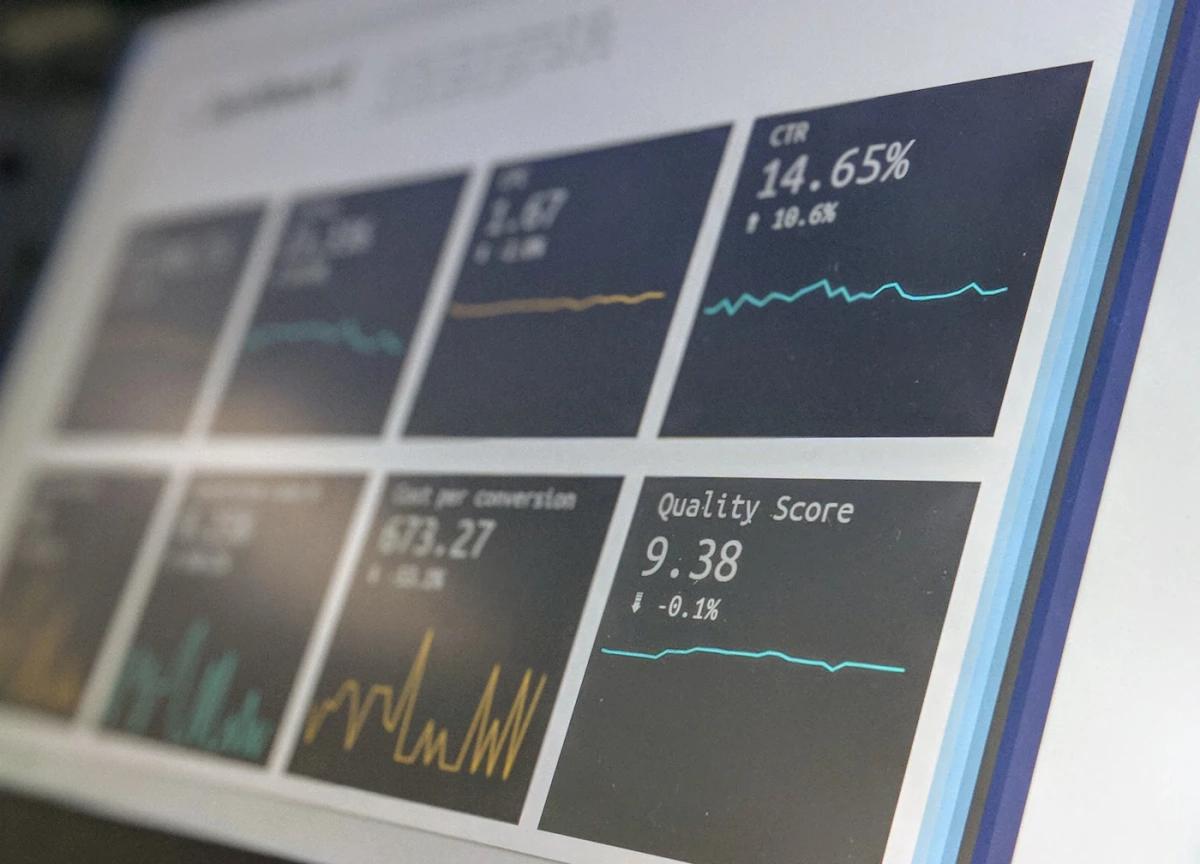
| Reporting | Track mentions, citations, and referral sessions | Monthly section in the existing report |
On the technical item, OpenAI's publisher FAQ distinguishes OAI-SearchBot, which handles discovery for ChatGPT search, from GPTBot, which relates to training. It advises publishers who want to appear in ChatGPT search not to block OAI-SearchBot. OpenAI also appends utm_source=chatgpt.com to referral links, so referrals can be segmented in GA4.
For tracking, Semrush's AI Visibility Toolkit covers Google AI Overviews, ChatGPT, Google AI Mode, Perplexity and Gemini, with weekly updates from a prompt database. Ahrefs Brand Radar covers seven platforms (ChatGPT, Perplexity, Gemini, Copilot, AI Overviews, AI Mode and Grok) and reports mentions, citations and AI share of voice. Ahrefs states its estimated impressions figure is a modeling choice, not a measured relationship. Both tools use sampled prompts, so they show direction, not exact counts.
What are the risks of launching too early or overpromising?
The main risk is promising outcomes nobody can guarantee. The best-known academic result, from Aggarwal et al. (2023), reported that GEO methods could improve visibility in generative engine responses by up to 40% on their GEO-bench benchmark, with results varying widely by domain. That was a controlled test on a research benchmark, not a live client campaign. Quoting it as a promised lift will backfire.
A second risk is buying into tactics Google says it does not need. Google's guidance on optimizing for generative AI features says llms.txt files, special markup, content chunked into tiny pieces, and writing in a special style for AI are unnecessary for Google Search, and that fake brand mentions provide little value. Some of those items may matter for other engines, and evidence there is thin. Sell what you can test.
A third risk is reporting. If you cannot show a baseline and a repeat measurement, you will not know whether a mention came from your work or from noise. Prompt responses vary between runs, so measure across many prompts and repeat them.
How should you introduce GEO to existing clients?
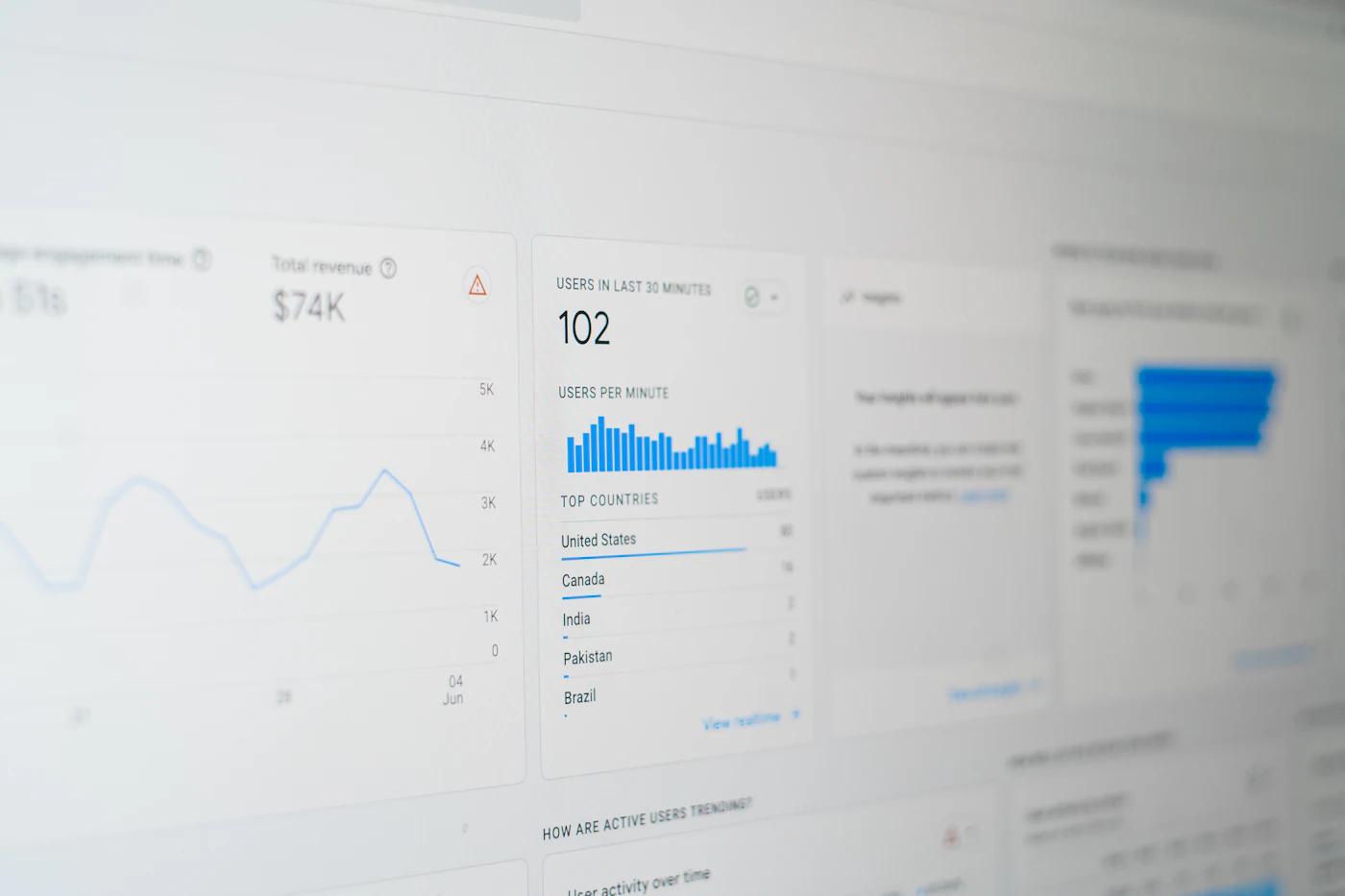
Bring it as an addition to the report, not a new invoice, for the first quarter. Add a short AI visibility section to two or three retainers, using a sample of prompts the client's customers would actually type. Show the results in a native table and explain what they mean in plain terms.
Then sort clients into three groups. Clients whose competitors are named in AI answers and who are not should be offered the full service first. Clients already named should get a maintenance tier. Clients in categories where AI answers rarely appear (some local trades, for example) can wait, and telling them so builds trust.
Pricing needs its own method, and we cover it in our guide to /how-to-price-a-geo-retainer. Public GEO price ranges are mostly vendor marketing. RevvGrowth, for example, states a range of $3,000 to $25,000 or more per month, which is one vendor's positioning and not a market survey.
Should you build the capability or partner for it?
Small agencies usually cannot justify a dedicated GEO hire before there is billable demand. A partner lets you sell the service, learn from real prompts, and decide later what to bring in house. White-label fulfillment is one route: a specialist team does the audit and content work under your brand. EliteLeadGrow provides white-label SEO and GEO fulfillment for agencies, and the trade-offs of that model against building in house are laid out in /should-agency-build-geo-in-house-or-outsource.
Whichever route you choose, keep the client relationship, the reporting and the strategy under your control. What you hand off should be production work with clear specifications, not judgment about the client's business.
The bottom line
The case for a GEO offering does not depend on any single statistic. Click-through drops of 15% to 58% depending on the study, AI-cited pages that often sit outside Google's top 10, and hundreds of millions of people using chat assistants weekly are each enough to justify measuring your clients' AI visibility. The offering itself can start as a baseline audit, a fan-out content review and a reporting table.
Build it before the request because the agency that arrives with data sets the terms. The agency that arrives after a client sees a competitor recommended by ChatGPT is negotiating from behind. Keep claims modest, measure twice, and let results decide how far to go.
Keep reading
- What Is White Label GEO and How Does It Work: definition of the fulfillment model.
- How to Price a GEO Retainer for Clients: pricing method.
- Should an Agency Build GEO In House or Outsource It: resourcing decision.
- Why Are SEO Agencies Losing Clients to AI Search
- What Does It Mean to Get a Brand Into ChatGPT
Sources
- AI Overviews Reduce Clicks by 34.5% (Ahrefs) - 34.5% position 1 CTR drop, 300,000 keywords
- New Research: Google's AI Overviews Now Cost Websites 58% of Their Clicks (Business Wire) - 58% figure, May 2026
- New data: Google AI Overviews are hurting click-through rates (Search Engine Land) - Amsive 15.49%, 19.98%, 18.68%
- Semrush AI search traffic study - 4.4 times value, early 2028 projection
- Ahrefs: AI search traffic conversions - 0.5% of traffic, 12.1% of signups
- Ahrefs: AI search overlap - 12% overlap, 15,000 queries
- Search Engine Journal: AI Overview citations from top-ranking pages drop sharply - 76% to 38%
- Ahrefs: AI Overview brand visibility factors - 75,000 brands, correlations
- GEO: Generative Engine Optimization (arXiv) - up to 40% visibility, GEO-bench
- Gartner press release, Feb 2024 - 25% prediction
- Future Factors on Gartner prediction - Google over 90% share
- ALM Corp: ChatGPT 900 million weekly users - OpenAI February 2026 announcement
- Forbes: 950 million people now use Gemini each month - Gemini users (headline seen in search results)
- Focus Digital: agency churn 2026 - 38% SEO churn, 48% delivery dissatisfaction
- Google Search Central: AI features and your website - no special requirements, query fan-out
- Google's guide to optimizing for generative AI features - llms.txt, chunking, markup unnecessary
- OpenAI publishers and developers FAQ - OAI-SearchBot, utm_source
- Semrush AI Visibility Toolkit features - platforms and metrics
- Ahrefs Brand Radar methodology - platforms and metrics
- RevvGrowth GEO pricing - vendor price range
Frequently asked questions
Is GEO just SEO with a new name?
Mostly it is SEO plus a new measurement layer and off-site work. Google says AI Overviews and AI Mode need no special optimization beyond normal indexing and snippet eligibility. The added work is tracking mentions and citations across ChatGPT, Gemini and Perplexity and building presence on pages beyond the client's own site.
How many clients will ask about GEO in the next year?
No reliable public figure exists for how many agency clients ask about GEO, so any percentage would be a guess. A safer approach is to check your own inbox and call notes for the phrases "ChatGPT", "AI Overview" and "AI search" over the last six months.
Can I guarantee citations in ChatGPT or Gemini?
No. Aggarwal et al. (2023) reported gains of up to 40% in a benchmark setting, but real results depend on competition, the site's current state and how the engines sample sources. Sell process and measurement, not rank.
What is the cheapest way to test demand?
Add an AI visibility section to two existing retainers using a free or trial tool plus manual prompt checks. Compare client reactions after one reporting cycle before building a paid service.