


Local SEO & AI Map Visibility

Win the "near me" answer - on Google and on AI.

When someone asks "best [service] near me," both Google's map pack and AI's shortlist decide in seconds. Local businesses that get the fundamentals right dominate both.

A store owner packing an online order while checking a phone
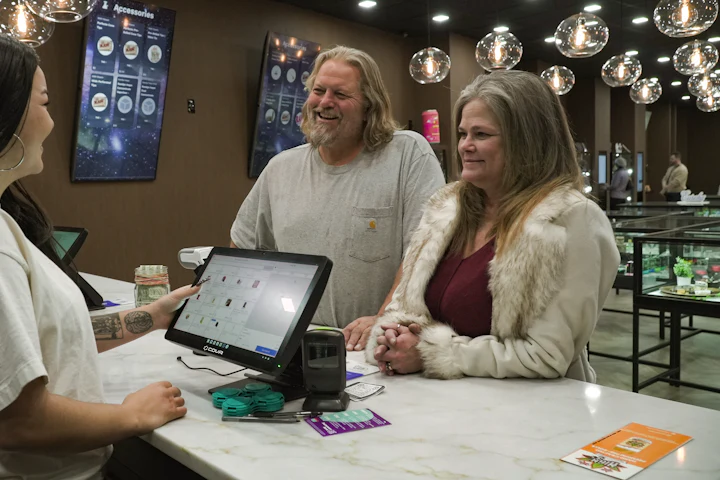
Shop staff chatting with customers at a counter
A dentist talking with a patient

What it is

End-to-end local optimization: Google Business Profile, citations, reviews, local schema and location pages - tuned so AI resolves exactly what you do and where.

Why it matters

Local, high-intent, high-ticket demand is decided in one answer with no page two. Consistency and genuine reviews are the biggest levers for local AI recommendations.
What we do
  • Optimize and maintain Google Business Profile and service-area settings.
  • Fix name/address/category consistency across every directory.
  • Launch a disclosed real-customer review engine (volume + recency + rating).
  • Build answer-first service-area pages with local and service schema.
  • Track map-pack and AI "near me" visibility together.

What you get

More qualified local calls and bookings - from customers who found you through Google and through AI.
Related services

Local SEO, in depth

How a business earns the map pack and the AI shortlist

Local SEO is the work of making a business with a physical location or service area appear in Google's map pack, in local organic results and in AI answers to 'near me' questions. EliteLeadGrow manages the Google Business Profile, keeps business details identical across directories, runs a real review process and builds location pages that match how customers search.

WebsiteBusiness ProfileDirectoriesReviewsPress mentionsSchemaYour business

How does Google decide who appears in the map pack?

Short answer

Google says local ranking rests on three things: relevance, distance and prominence. Some of each can be changed and some cannot, and the work goes where change is possible.

The detail

Distance is why two people in the same city can see different results for the same search. For that reason we check positions from more than one point in the service area, not from a single spot.

The three local ranking factors
FactorWhat it meansWhat we can changeWhat we cannot change
RelevanceHow well the profile matches what the searcher wantsPrimary category, services, descriptions, website contentThe searcher's wording
DistanceHow far the business is from the searcher or the place namedAccurate address or service area, and extra locations where they are realWhere the searcher is standing
ProminenceHow well known the business is, online and offlineReviews, links, mentions, consistent listingsHow long competitors have been established

What does a Google Business Profile need to be complete and compliant?

Short answer

It needs the right primary category, an accurate name, address or service area, hours, services and real photos, and it must follow Google's guidelines or risk suspension.

The detail

Keyword-stuffed names and invented addresses are the most common causes of suspension, and recovery can be slow. We follow the guidelines even when a competitor's listing breaks them.

  • Primary category chosen for the main revenue service, with secondary categories only where they apply
  • Business name exactly as it appears in the real world, with no added keywords
  • Storefronts show an address; service-area businesses hide it and list the areas they serve; no virtual offices or mailboxes
  • Hours kept current, including holiday hours
  • Services or products listed with descriptions
  • Photos taken at the real location, added regularly
  • Reviews answered, and posts used for real updates
WebsiteBusiness ProfileDirectoriesReviewsPress mentionsSchemaYour business

How do service-area pages avoid being doorway pages?

Short answer

By giving each page content that exists only because of that place. Google's spam policies treat near-duplicate pages that swap only the city name as doorway pages.

The detail

A useful location page names the neighborhoods served, lists the services actually offered there, shows real projects or customer feedback from the area, gives local contact details and answers questions specific to that place. We add LocalBusiness or Service schema with the area served, matching the visible text. If we cannot write something true and different for a location, we do not create the page.

How do service-area pages avoid being doorway pages?

SourceYour website
By giving each page content that exists only because of that place.

Where does AI get local business information?

Short answer

Assistants commonly draw on the same places people do: map data, business profiles, review platforms, directories and the business's own site. Each assistant weights them differently, and the weighting changes.

The detail

Google's products use Google Business Profile data. Microsoft's use Bing Places, and Apple Maps uses Apple Business Connect. Review platforms such as Yelp can supply data to other services. Because the mix varies, the safe approach is one canonical set of facts, claimed and verified on each major source, so whichever an assistant reads says the same thing.

WebsiteBusiness ProfileReviewsDirectoriesYelpYour business

How is a multi-location business different?

Short answer

Each location needs its own profile, its own page and its own reviews, tied together by one brand. One Google Business Profile per eligible location, one location page per profile with unique content and consistent naming are the base.

The detail

Reviews must be about that location, and structured data for each one carries its own address and hours, linked to the parent Organization. A store locator that loads results only through JavaScript or behind a form can hide the location pages from crawlers, so every location needs a normal URL.

Your page
Crawled
Indexed
Retrieved
Quoted

When is local SEO the wrong tool?

It is the wrong tool when customers do not search by place. A business selling online to a national market, or one whose buyers never type a location, gets little from map-pack work. Standard SEO and content fit better there.

When is local SEO the wrong tool?

SourceYour website
It is the wrong tool when customers do not search by place.

How a local program runs

  1. Find every listing

    Collect each profile and directory entry, then write one canonical set of business facts.

  2. Fix and verify the profile

    Correct the Google Business Profile, then claim and match the other major listings.

  3. Start the review process

    Set up a request that goes to every customer, with a reply routine for every review.

  4. Build pages and track

    Publish location pages with real local content and check positions from several points in the area.

Questions

Local SEO questions

Local results depend on the searcher's location. Distance is one of the three ranking factors, so positions change as people move. We track from several points in your service area.

Service-area businesses that visit customers can hide the address and list the areas they serve. Businesses that receive customers at a location must show it.

Yes, positive and negative. Keep replies calm and factual. A reply on a negative review is read by the next buyer as well as the reviewer.

Report it through the platform's own process and document why it breaks the rules. A review you merely dislike cannot be removed, and retaliating against a reviewer makes things worse.

Accuracy matters more than volume. We correct the major sources and the directories specific to your industry, and remove duplicates that confuse the data.

It is name, address and phone number. When they differ between your site, profile and directories, engines and assistants cannot tell whether the listings describe the same business.

You need a real presence or a real service area there. We then build location pages with true local content. Pages created only to hold a city name do not help and can be penalized.

Keep reading

Check your market

Check your map pack position

We check your positions from several points in your service area and show who Google and AI recommend there today.