


Home Services

GEO for HVAC, roofing, plumbing - win the AI 'call now' moment.

Homeowners with a burst pipe or dead AC ask ChatGPT or Google's AI overview before they Google. We make sure AI names your company - with the right service area, hours, and emergency availability.

ChatGPTGoogle AI OverviewsGeminiPerplexityClaudeCopilot
An electrician in a hard hat working on a wall panel
Hands typing on a laptop with a chart on screen, next to a phone and glasses
A store owner packing an online order while checking a phone
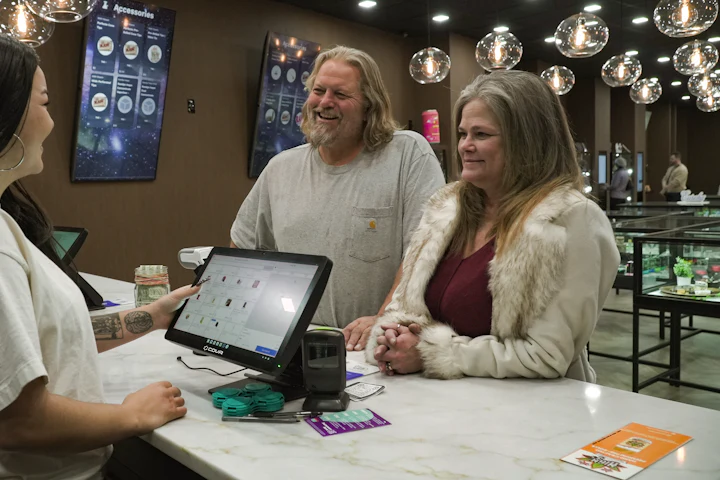
Shop staff chatting with customers at a counter

Real questions

What homeowners ask AI when something breaks.

  • emergency plumber near me open now
  • who fixes AC on a Sunday in [city]
  • best roofing company for storm damage in [city]
  • how much does a water heater replacement cost in [city]

The problem

Why local pros miss the AI call

Urgent searches end in one recommendation

A homeowner with water on the floor takes the first credible name the model gives. Second place is no call.

Service area is fuzzy

Models will not recommend you for a suburb they cannot confirm you cover.

Hours and emergency availability are wrong

'Open now' is a data field. If it is stale, you are filtered out of the exact moment you want.

Reviews and licences are not connected

Licensing, insurance, and reviews live in separate places, so no single source proves you are safe to call.

What you get

Built for trades and home services

Service-line entity map

Every trade and service (install, repair, emergency) structured as a retrievable entity per location.

Service-area precision

Zip-code and city-anchored citations so AI cites you for the exact areas you serve.

Emergency-availability signal

24/7 status structured so AI recommends you for 'right now' prompts.

BBB + review stacking

Angi, HomeAdvisor, BBB, Google - the exact sources AI pulls trust signals from.

Response-time proof

Structured 'same-day' and response-time signals engineered to be retrievable.

Per-city tracking

Track share of voice per city, per service line, every month.

In order

From skipped to the pro AI sends

  1. Prompt audit

    Probe 25+ AI models with 'emergency [trade] [city]' prompts your customers use.

  2. Entity + service schema

    HomeAndConstructionBusiness schema per location and service line.

  3. Citation placement

    Directories, review platforms, and local publishers AI models actively cite.

  4. Monthly re-scoring

    See your share-of-voice climb per city, per trade, month over month.

The result

What changes when the phone rings

  • You are named for emergency and 'near me' prompts across your service area.
  • Coverage, hours, and availability are correct wherever a model checks.
  • Licensing and insurance are verifiable signals, not claims on a page.
  • Call volume increases during the hours that actually convert.

Your questions

Home Services, answered

Yes. Multi-city coverage is standard. Each service area is modeled independently so AI recommends you correctly per city.

Seasonal patterns are built into the entity so AI recommends you in-season and pauses your surface out-of-season.

Most home-services companies see AI-referred calls within 30 to 45 days, faster for underserved trades and cities.

Yes. GBP is one signal AI pulls from, and we tune it - but GEO covers 20+ additional AI-cited sources GBP doesn't.

Yes. We instrument call tracking and prompt monitoring so you see AI-attributed calls in your reporting.

Estimate the AI-referral lift

See how much revenue a top spot in AI answers is worth for your service area.

Home services search

How homeowners use AI to pick a contractor, and what gets one named

Home-services GEO makes a trade business easy for AI assistants to recommend for urgent and planned jobs: which services it offers, which cities and postal codes it covers, when it is open, and whether it is licensed and insured. It combines local entity data, service-area pages, consistent listings and real customer reviews so an assistant can name the company with confidence.

WebsiteBusiness ProfileDirectoriesReviewsPress mentionsSchemaYour business

How do homeowners use AI to find a plumber, roofer or HVAC company?

Short answer

They use it in two modes: urgent mode, where one trustworthy name is enough, and planning mode, where they compare. Urgent prompts sound like 'emergency plumber near me' or 'AC not cooling on a Sunday'. Planning prompts sound like 'how much does a roof replacement cost in [city]', 'is [company] reputable' or 'what should I ask a roofer'.

The detail

Urgent mode is decided on data that is current: open now, covers my address, a phone that answers. Planning mode is decided on explanation and proof: price ranges, the process, licence and reviews. A company needs material for both, and most have only one.

How do homeowners use AI to find a plumber, roofer or HVAC company?

SourceYour website
They use it in two modes: urgent mode, where one trustworthy name is enough, and planning mode, where they compare.

What does AI need before it names a trade company?

Short answer

It needs to know exactly what the company does, where, when, and whether it can be trusted. The table maps each requirement to what to publish. Use the specific schema.org type for the trade, such as Plumber, Electrician, HVACBusiness or RoofingContractor, rather than the generic LocalBusiness.

WebsiteBusiness ProfileDirectoriesReviewsPress mentionsSchemaYour business
What AI looks for and what a trade business publishes
What AI looks forWhat to publish
Business typeThe specific schema.org trade type, matching the primary category on Google Business Profile
Service areaA list of cities and postal codes served, in text and in areaServed, plus a page for each main city
Hours and emergency statusOpening hours and a clear statement about after-hours work, matching Google Business Profile
Licence and insuranceLicence number where your state requires or allows it, plus insurer and bonding details, in text
Services and pricesA page per service with honest price ranges and the factors that move them
ReviewsRecent reviews on Google and on the platforms your trade uses, from real customers
ContactOne main phone number per location, with any tracking numbers added as secondary numbers

How should service-area pages be built?

Short answer

One page per city or district the company actually serves, each with content that is true of that place. Google's spam policies treat near-identical pages that only swap the place name as doorway pages, and they give an assistant nothing specific to quote.

The detail

Useful local detail is easy for a working contractor to supply: typical jobs in that area, local permit or code points, the age of the housing stock, response area, and reviews from customers there. Service-area businesses that hide their address on Google Business Profile should still state the areas served on the site.

How should service-area pages be built?

SourceYour website
One page per city or district the company actually serves, each with content that is true of that place.

Why do lead sites appear in AI answers instead of the company?

Short answer

Because directory and lead-generation pages answer the question in a form an assistant can quote, and many company sites do not. A page that explains typical costs, the steps of a job and the questions to ask a contractor is easy to cite. A page that only lists services and a phone number is not.

The detail

A company cannot remove those third-party pages, but it can compete on the specific question. Publish cost guides and process pages with company-specific facts, and keep profiles on Angi, Yelp, the Better Business Bureau and similar sites accurate, because assistants read them too.

What rules apply to licences, reviews and claims?

Short answer

Contractor licensing and advertising rules vary by state and trade, and review rules apply everywhere, so check both before publishing. Some states require a licence number in advertising. Claims such as 'licensed and insured' or 'lifetime warranty' must be accurate, with the terms available to read.

The detail

The FTC finalized a rule in 2024 on fake and manipulated reviews and testimonials. Ask real customers for reviews and never buy or write them. Platforms add their own rules: Google, for example, does not allow review gating, which means asking only happy customers to review. This is general information, not legal advice.

WebsiteBusiness ProfileDirectoriesReviewsPress mentionsSchemaYour business

Questions

Home services questions

For each main city you serve, yes, provided each page has real local content. Do not create dozens of near-identical pages. A smaller set of genuine pages works better than a large set of thin ones.

It tends to read hours from Google Business Profile, your site and directories, so any stale source can be used. Keep all of them in step, including holiday and after-hours changes.

Publish ranges and the factors that change them, such as size, materials and access. Assistants answer 'how much does it cost' questions, and a page that explains cost honestly is a good candidate to be cited.

It can if tracking numbers replace the main number on listings. Keep the main number consistent everywhere and add tracking numbers as secondary numbers where the platform allows.

Many people read an answer and phone directly, so referral data alone undercounts. Ask 'how did you hear about us' on every call, include an AI assistant option, and watch referral sources such as chatgpt.com and perplexity.ai.

Publish seasonal service pages with dates, and update hours and availability when the season changes, so assistants do not recommend you for work you are not taking.

Keep reading

For trade companies

Be the name they call

We check what assistants say about your company in each city you serve, then list the fixes in order of impact.