


Financial Services

GEO for advisors, wealth, and fintech - win the regulated AI moment.

Prospective clients ask ChatGPT 'best fee-only advisor near me' or 'top wealth manager for tech founders' before scheduling. We make sure AI names your firm - with the right credentials, minimums, and specialties.

ChatGPTGoogle AI OverviewsGeminiPerplexityClaudeCopilot
Two advisors discussing charts on a laptop in a meeting
Hands typing on a laptop with a chart on screen, next to a phone and glasses
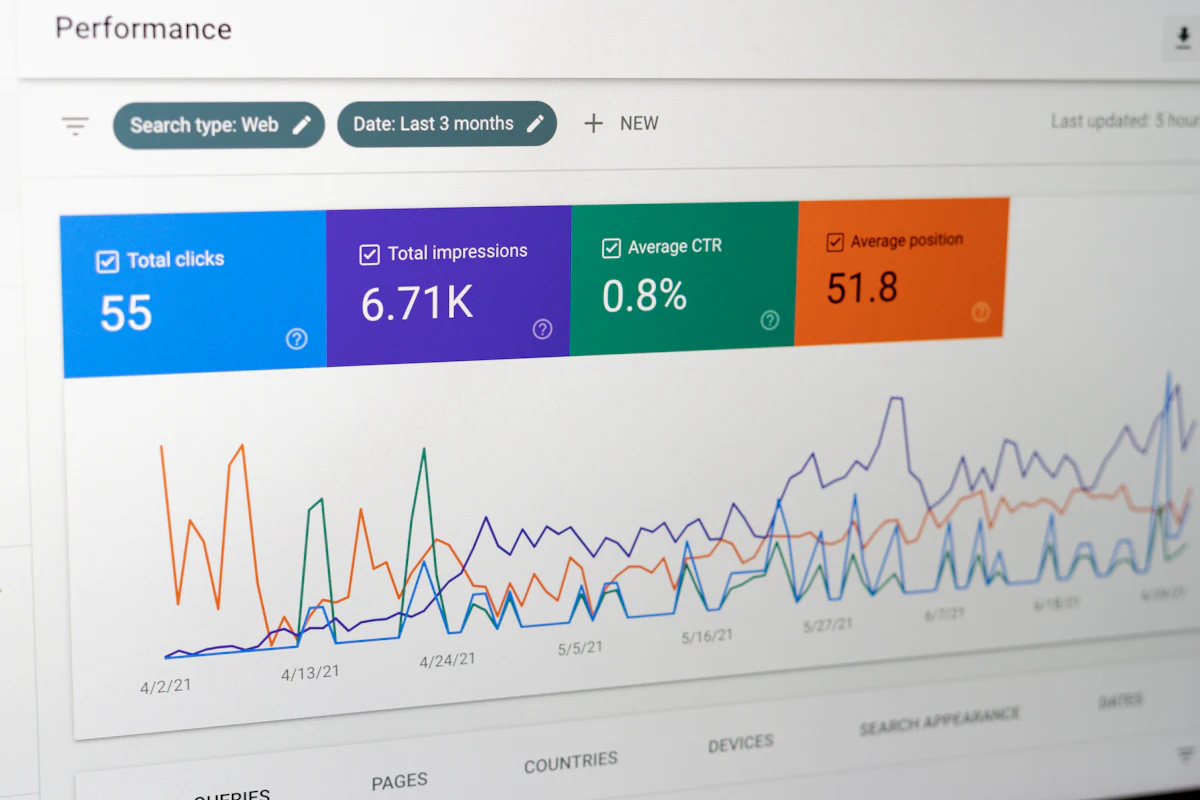
A search performance screen with clicks, impressions and position figures above a trend line
A green trend line chart on a screen

Real questions

What clients ask AI before choosing an advisor.

  • best fee-only financial advisor near me
  • who manages wealth for tech founders in [city]
  • which advisor specialises in retirement planning for physicians
  • is [firm] a fiduciary

The problem

Why firms lose trust in AI answers

Prospects vet you through a model first

High-value clients ask AI to pre-screen advisors. The screening happens before any form is submitted.

Credentials are not structured

CFP, CFA, fiduciary status, and registrations sit in prose that models cannot convert into trust signals.

Minimums and specialties are unclear

Models avoid recommending firms whose fit criteria they cannot state confidently.

Compliance caution has left the profile empty

A thin, ultra-conservative web presence reads to a model as an unknown firm.

What you get

Built for financial firms

Advisor + firm entity map

FinancialService + Person schema for every advisor, credential (CFP, CFA), and specialty.

SEC/FINRA-safe posture

Every claim is compliance-reviewed. No performance guarantees, no forbidden testimonials.

Client-persona coverage

Retrieval-optimized content for 'advisor for [tech founders / physicians / retirees]' prompts.

ADV + disclosure structuring

Form ADV data structured so AI models cite fees, minimums, and AUM accurately.

Credential authority

CFP Board, CFA Institute, and NAPFA listings tuned as authoritative entity signals.

Persona-level tracking

Share of voice per prospect persona, per specialty, per month across every major AI model.

In order

From unlisted to the firm AI trusts

  1. Prospect-prompt audit

    Probe 25+ AI models with the specialty, minimum-asset, and geography prompts your prospects use.

  2. Advisor + firm schema

    FinancialService, Person, and Credential schema tuned for LLM retrieval.

  3. Editorial + directory citations

    Placements in NAPFA, WealthTender, Bankrate, and financial-publisher sources AI cites.

  4. Monthly re-scoring

    Screenshots showing your firm named in AI responses to real prospect prompts.

The result

What changes for your advisors

  • Your firm is named for the client profiles you actually serve.
  • Fiduciary status, registrations, and credentials are machine-verifiable.
  • Fit criteria are explicit, so unqualified enquiries drop.
  • Compliance posture stays intact while visibility improves.

Your questions

Financial Services, answered

Yes. Every claim is factual, disclosed, and framed within SEC IA rule 206(4)-1 and FINRA Rule 2210. Testimonials follow the modern framework with proper disclosures.

Both. Each entity type is modeled with the correct regulatory posture and disclosure framework.

Only verifiable, disclosed data structured so AI models cite fees and minimums accurately. No performance projections.

Yes - these high-consideration specialties see the largest AI lift because prospects research heavily before booking.

First citations in 30 to 60 days. Compounding lift across months 2 to 4.

Read the Kaufman Rossin case study

How a Miami accounting firm got ahead of the Big Four in AI recommendations.

Financial search behavior

How people use AI to vet a financial firm, and what it can verify

Financial-services GEO makes an advisory firm, bank, lender or fintech easy for AI assistants to describe accurately: who it serves, what it offers, which registrations and credentials it holds, and how it is paid. It relies on verifiable entity data, regulator and credential listings, and compliant wording, since assistants tend to be cautious about recommending anyone who handles money.

WebsiteBusiness ProfileDirectoriesReviewsPress mentionsSchemaYour business

How do people use AI when choosing a financial advisor or provider?

Short answer

They use it to learn the vocabulary first, then to screen firms against a few criteria before contacting anyone. Early prompts are 'difference between fee-only and fee-based advisors', 'what is a fiduciary' and 'how much does a financial advisor cost'. Later ones are 'advisor for physicians approaching retirement' or 'is [firm] legit'.

The detail

Verification questions such as 'is this firm registered' send people to regulator records. Money topics are treated as high-stakes, so assistants tend to add caveats and point to professionals. A firm's opportunity is to be the cited explainer and the name that checks out when someone looks it up.

How do people use AI when choosing a financial advisor or provider?

SourceYour website
They use it to learn the vocabulary first, then to screen firms against a few criteria before contacting anyone.

What does AI need to describe a financial firm accurately?

Short answer

It needs identity, registration, credentials, compensation and client fit stated in places it can read and cross-check. The table pairs each with what to publish. Mark up the firm with FinancialService, or a more specific type such as AccountingService, InsuranceAgency or BankOrCreditUnion where it fits, and each advisor with Person.

WebsiteBusiness ProfileDirectoriesReviewsPress mentionsSchemaYour business
What AI looks for and what a financial firm publishes
What AI looks forWhat to publish
Legal identityThe exact registered firm name, address and entity type (for example registered investment adviser, broker-dealer, bank or lender), stated on the site
RegistrationLinks to the firm's record on the regulator or industry lookup that applies, such as SEC IAPD or FINRA BrokerCheck in the US
Advisor credentialsA bio page per advisor with credentials such as CFP or CFA, linked to the issuing body's verification page, with Person schema
How the firm is paidA plain-language fee structure and a link to the current Form ADV Part 2A brochure where one applies
Who it servesClient types, asset or income thresholds if the firm uses them, and services offered
ServicesA page per service, such as retirement planning or tax coordination, with limits stated
Third-party proofAssociation memberships, directory entries and press quotes from named advisors
DisclosuresRequired disclosures in the same text block as the claim they qualify

Why do disclosures need to sit next to the claim?

Short answer

Because assistants lift single sentences, and a disclaimer in a footer does not travel with them. A statement about returns, savings or fees can be reproduced without the qualifying text that made it accurate.

The detail

Put the qualification in the same paragraph as the claim, in plain text rather than in an image or a PDF. Publish performance figures only where compliance has approved the exact presentation. Educational content that explains how something works carries far less risk than content that implies an outcome.

What advertising rules apply to financial firms?

Short answer

Several, depending on the firm's type and location, and the firm's compliance function is responsible for applying them. In the US, investment advisers are subject to the SEC Marketing Rule (Rule 206(4)-1 under the Advisers Act), which covers testimonials, endorsements, third-party ratings and performance. Broker-dealers follow FINRA Rule 2210 on communications with the public. States add rules of their own.

The detail

Lenders, card issuers and insurers face disclosure requirements for rates, fees and terms. Regulators in other countries, such as the FCA in the UK, have their own rules on financial promotions. Compliance review should cover bios, reviews and any page an assistant might quote.

WebsiteBusiness ProfileDirectoriesReviewsPress mentionsSchemaYour business

How do lenders and fintech products appear in AI answers?

Short answer

Mostly through comparison lists on editorial and affiliate sites, so product pages need to be the accurate source those lists draw from. Prompts such as 'best high-yield savings account' or 'best business credit card for freelancers' return lists that cite third-party pages as well as the providers.

The detail

State rates and fees with an as-of date, eligibility rules and key terms in text. Stale rate data is worse than none, because an assistant will repeat it. FinancialProduct is the schema.org parent type for product markup, and its subtypes fit loans, accounts and cards.

Questions

Financial firm questions

Assistants mostly explain how to evaluate advisors, and they sometimes name firms when web search is on. Behavior varies and is often cautious. The firm's job is to be accurate, verifiable and easy to cite.

Rules on testimonials and endorsements differ by firm type and jurisdiction, and in the US the SEC Marketing Rule attaches conditions and disclosures for advisers. Ask compliance before using any.

Assistants answer fee questions either way. A compliance-approved explanation of how the firm is paid gives them an accurate source instead of a guess from a third-party directory.

Those are the records people check, and consistency matters. Make sure the firm name, address and descriptions on your site match what the regulator lists.

A thin site reads as an unknown firm. Educational pages that define terms, explain processes and describe who you serve add substance without performance claims.

Ask a fixed set of prompts, including 'is [firm] legit', your specialty plus city, and fee questions, across the main assistants, more than once. The free audit records the answers and flags factual errors.

Keep reading

For financial firms

Make the firm verifiable

We check how assistants describe your firm, credentials and fees today, then list the fixes with your compliance team in the loop.